





Note:
Aug - Oct 2026:I grew up in Korea surrounded by hanji without ever thinking of it as a material to be chosen. It was the lantern left burning in a hallway at night, the light behind a sliding screen door, a texture I recognized before I had language for why it held my attention. When I moved to New York and began building with it, I wasn't reaching for a symbol of where I came from. I was returning to something I had never examined.
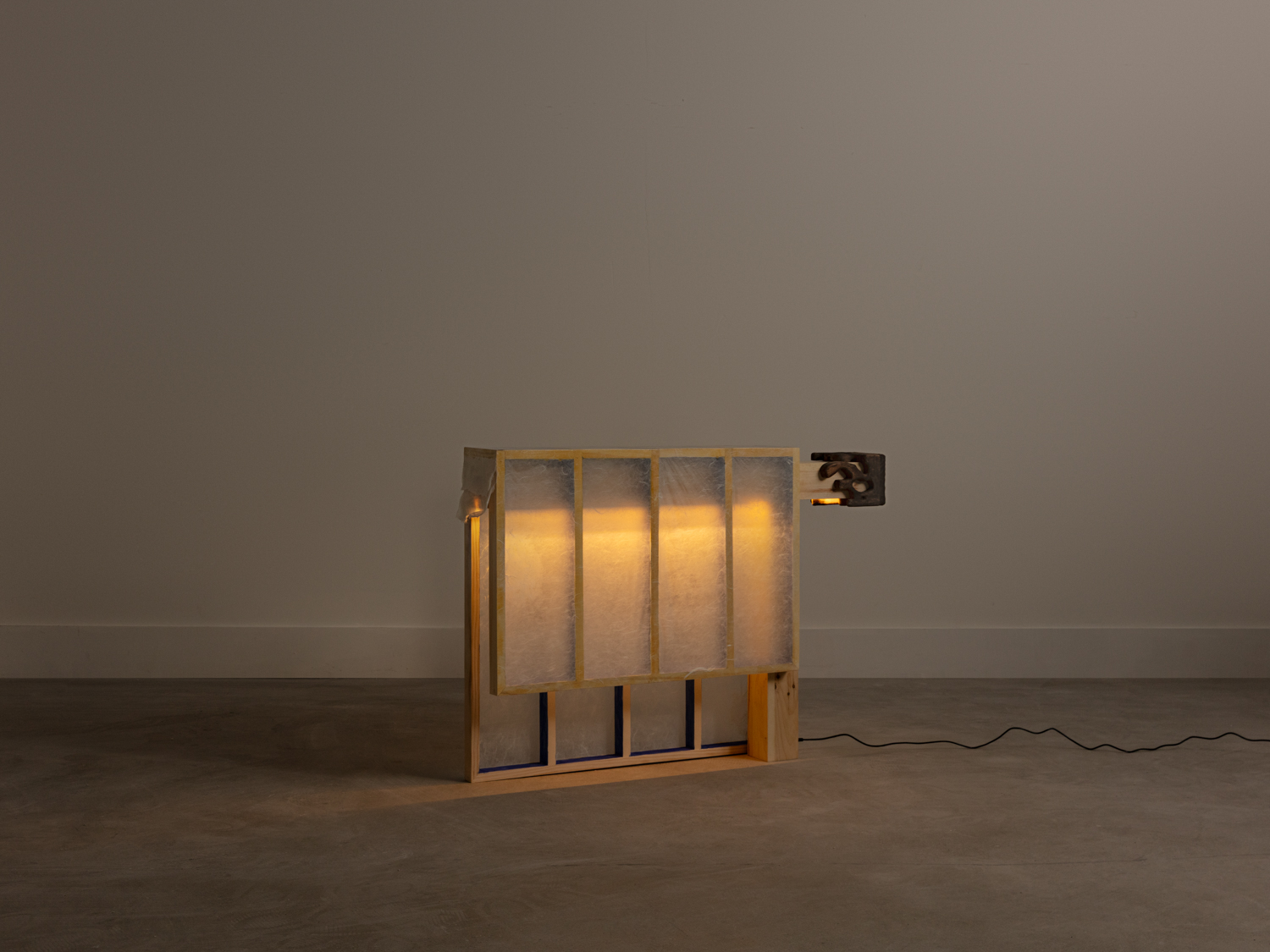
Hanji neither transmits light fully nor blocks it. It holds light in between. Facing a light source, it exists as surface. Turned away from one, it lets the silhouette of whatever sits behind it pass through, faintly. I did not invent this condition. I only chose to keep building around it.
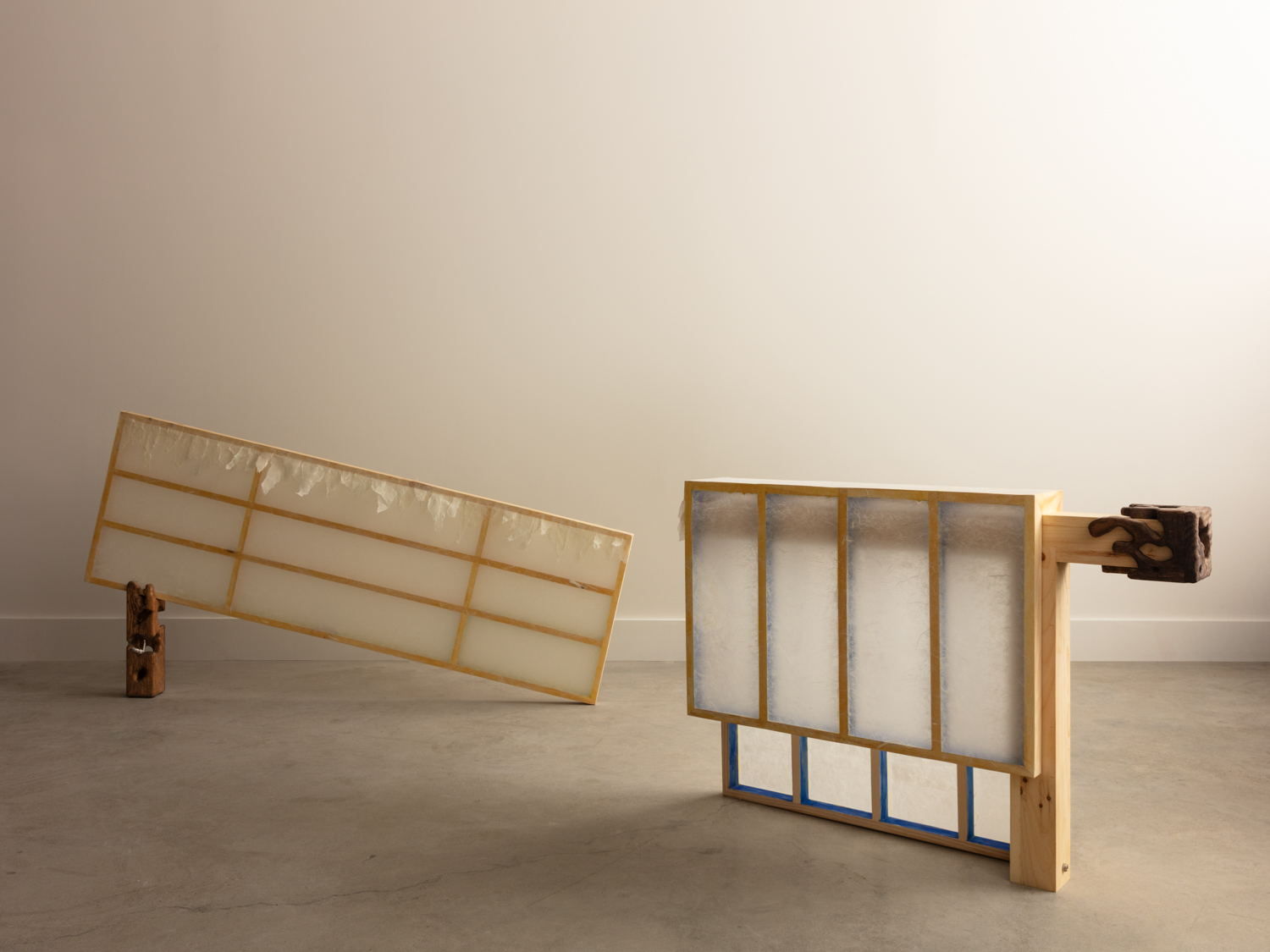
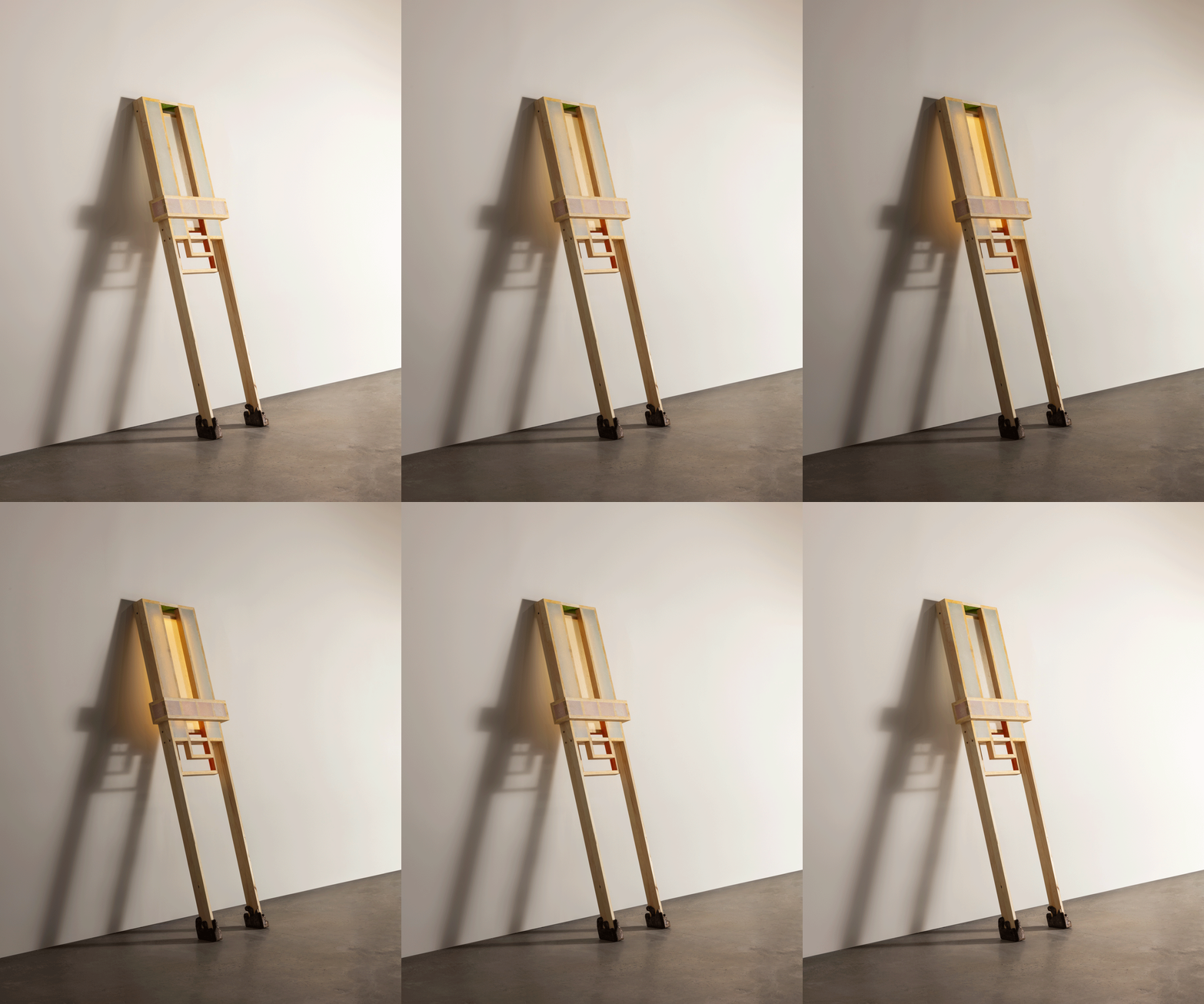
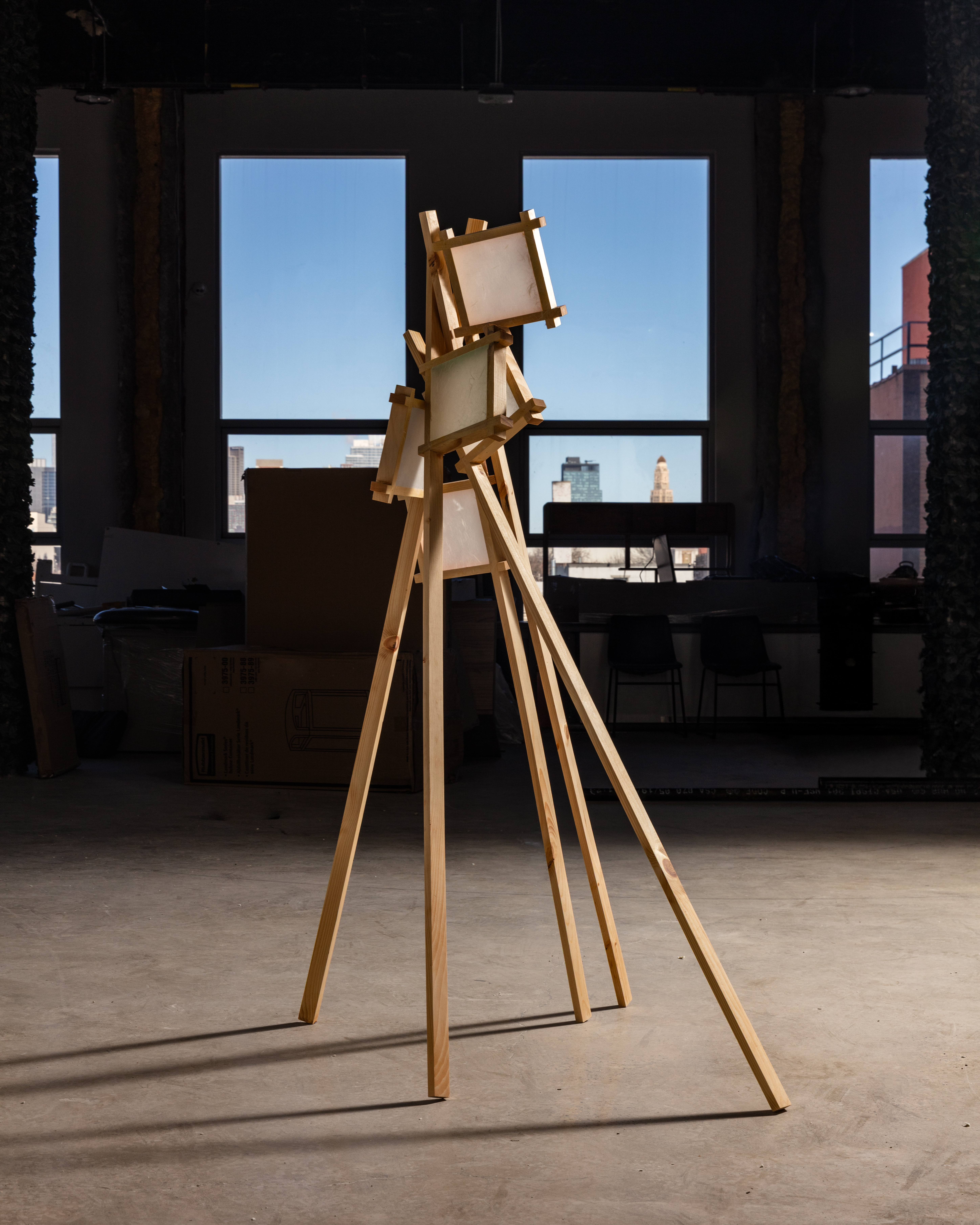
I work without a blueprint, adjusting unfinished frames until a structure finds its position. Pine, the wood of temporary framing, carries its provisional status intact. I cut openings, cover others, attach hinges, rest one part against another, and sometimes allow a structure to depend on the wall, the floor, or another part of itself to remain standing. What began for me as a way of holding hanji has gradually become a way of thinking about how a structure holds itself, and what happens when that condition can change.
There are two kinds of fixation in this work: one that does not move again, and one that can be undone by hand at any time. An angle can shift. A rod can rest across a gap. A panel can be hinged open or shut. More recently, entire sections of a work can fold outward, changing both the object and the space it occupies. These positions are not variations of a finished form. Each produces a different relationship between what is visible, what is blocked, and what can be passed around or seen through.
I do not decide alone what gets discovered and what gets passed over. A viewer's height, their eyesight, the direction they approach from, and where they choose to stand function as the same kind of choosing I perform when I decide where to cut an opening or leave one covered. As the works have moved further from the wall and into the room, this has become increasingly physical. Seeing something may require moving around it, looking through several layers, or encountering the back before the front.
I adjust the form, but I do not know what it will become to someone else. Nor do I think of any single position as its final one. What matters to me is not the completed moment, but the state of continually deferring it.
Past notes
Apr 2026:
I begin by drawing, measuring, and building. Most of the time, though, I am adjusting: turning unfinished frames, placing them close, far, above, or beside one another. I am less interested in finding a fixed position than in delaying the moment when one becomes necessary. The concept comes later. The hand comes first.
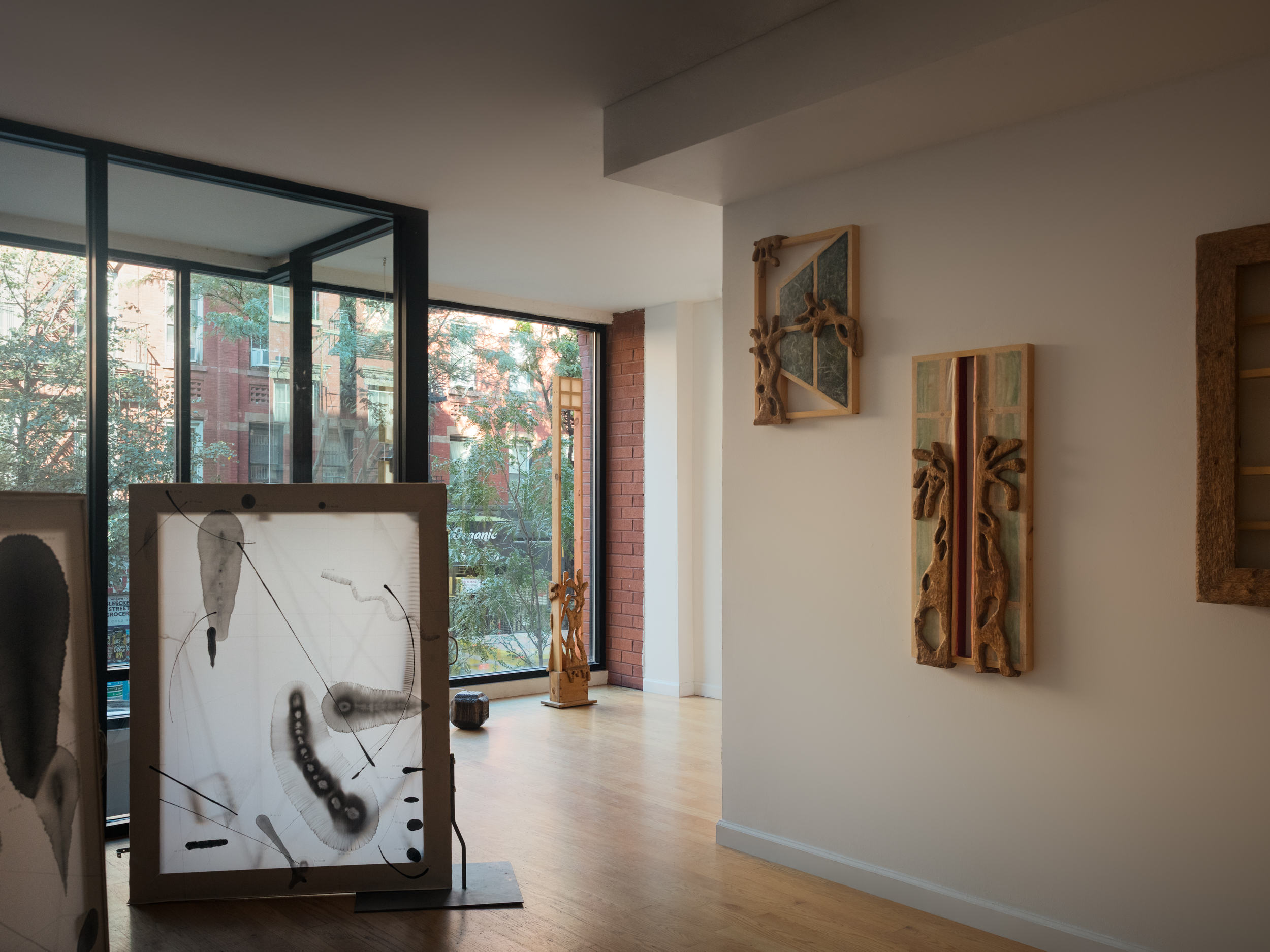
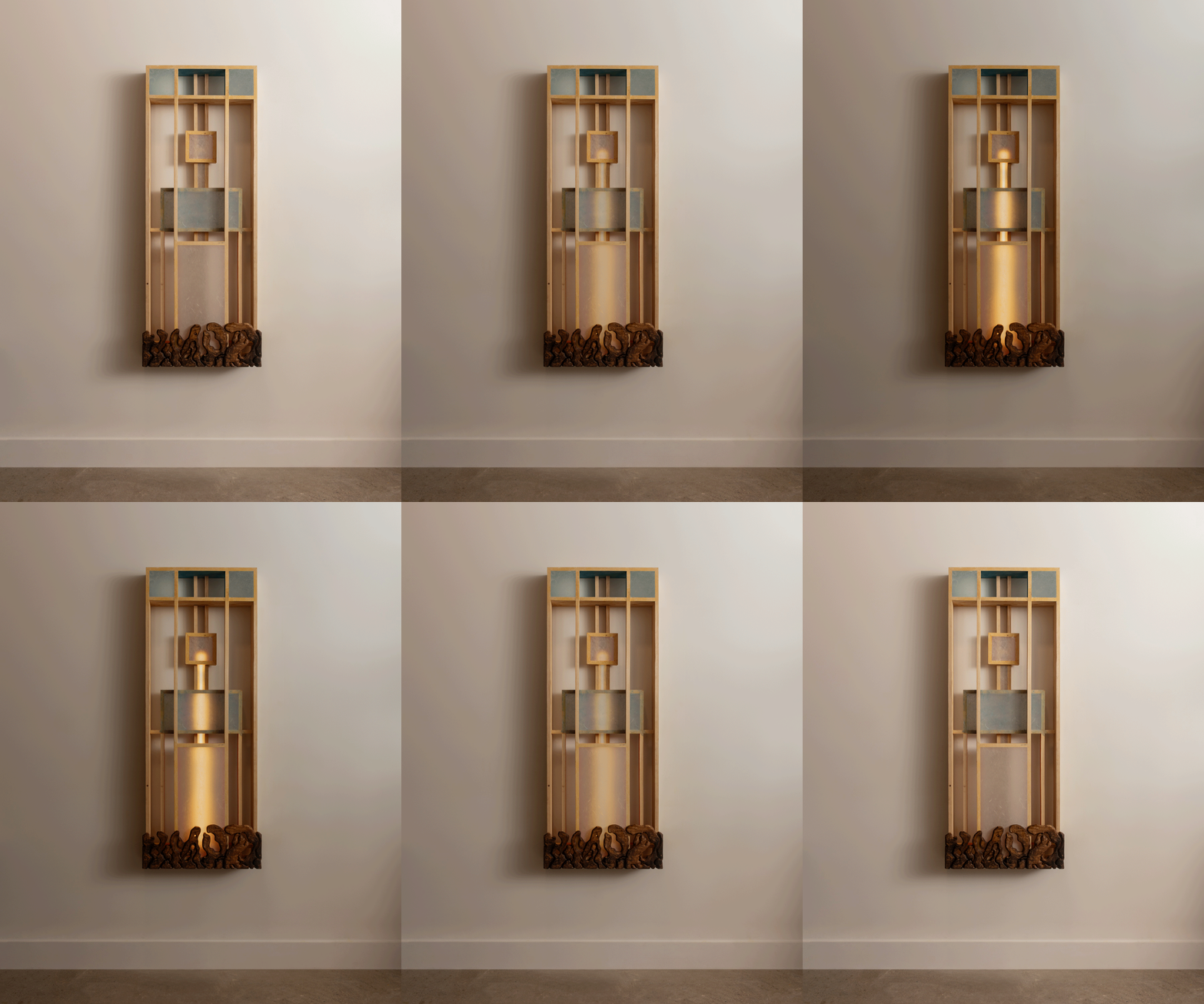
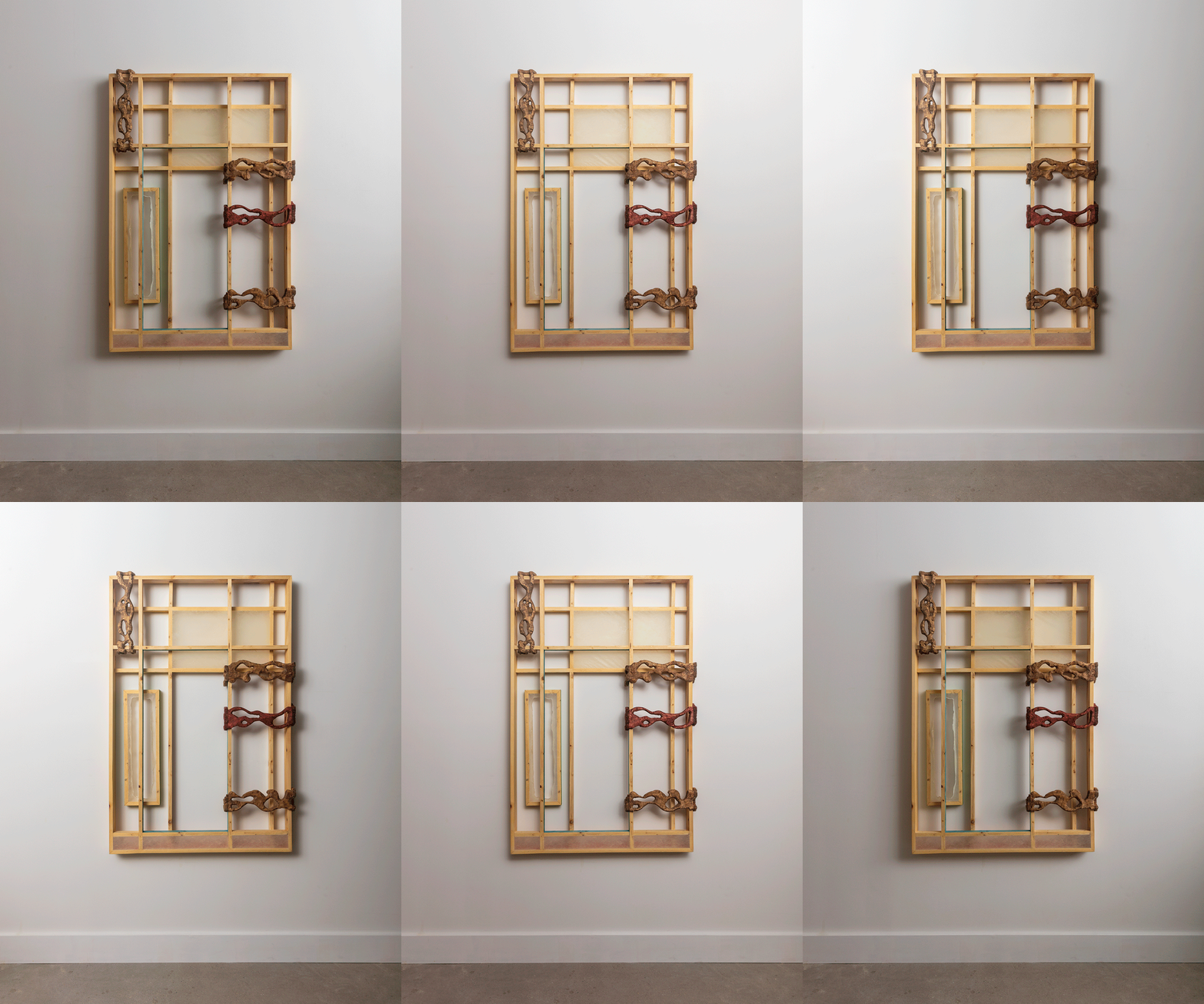
I build frames from pine wood and hanji. These structures are not borders but thresholds, at once architectural and unstable, neither fully wall nor window. Hanji does not simply transmit or block light; it holds it, diffusing the boundary between inside and outside without resolving it. Carved wooden forms interrupt any complete opening or closure. The structures lean, press, or rest against surrounding surfaces, their balance contingent on contact.
Hanji is not simply a material I use because of my Korean background. It produces a specific perceptual condition, resisting the clean passage of light, image, and meaning. In this sense, it is inseparable from the work itself. The paper becomes a site where cultural memory and formal inquiry converge without one serving to explain the other.
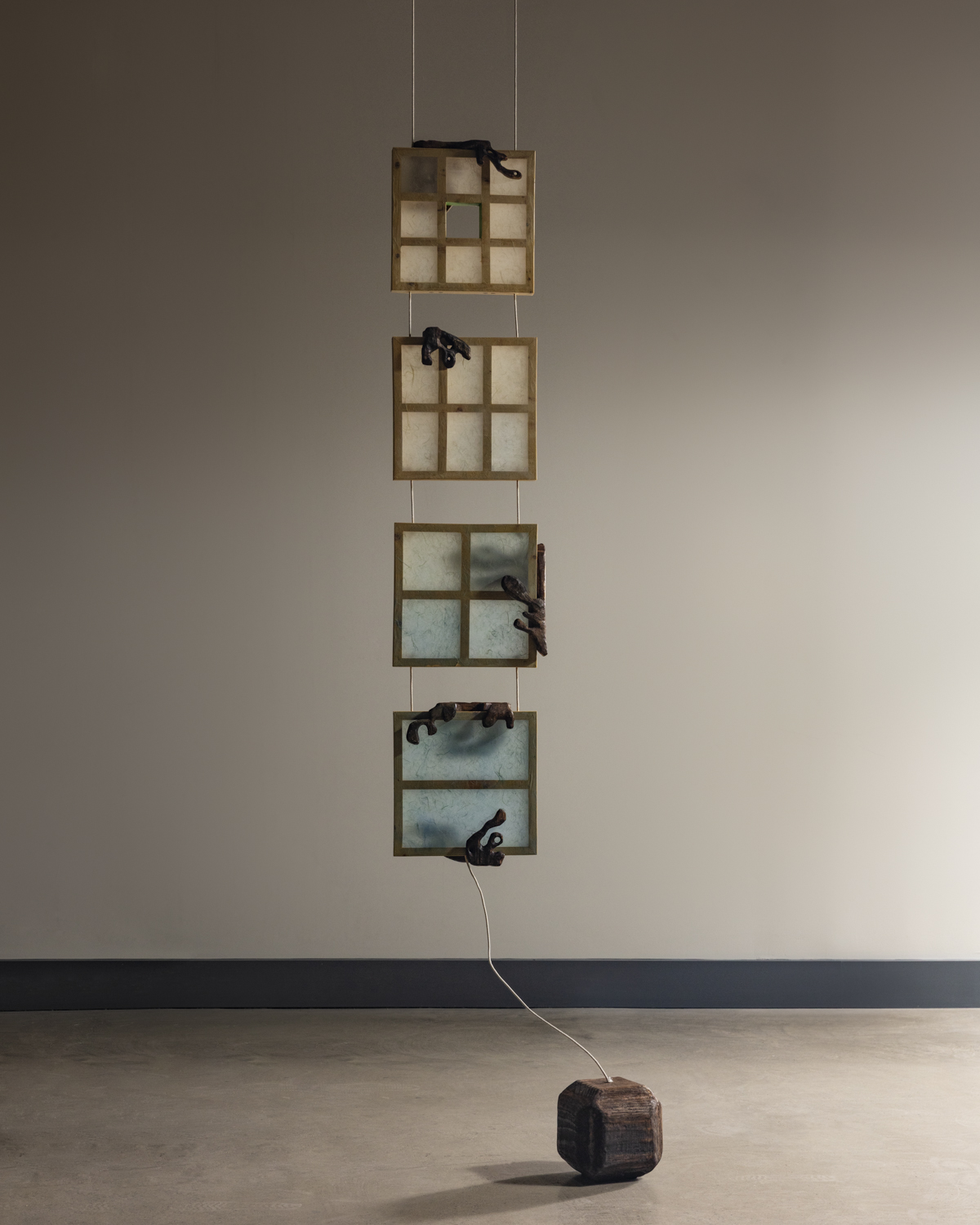
More recently, carved organic forms have entered the work, emerging from gestures of touching, opening, and reaching. These forms grasp the frame from outside, partially obscuring what lies within. They are neither decorative nor symbolic. They register the body’s attempt to negotiate with a structure that resists full access.
Light appears throughout these works not as illumination but as pressure, something caught within the material before it can fully disclose itself. Some structures contain a small LED source behind hanji; others gather ambient light across their surfaces. In either case, visibility is shaped by resistance, weight, and friction rather than transparency.
What matters is not resolution but the sustained condition of remaining unresolved. The work holds itself there, at the threshold of opening and refusal. I remain there too, not fully inside or outside, but held in relation to that tension. Still, I am there.
Jan 2026:
My recent work approaches the window not as a metaphor for viewing, but as a condition—an unstable state that can slip, resist, or require intervention to remain in place. Using pinewood frames, hanji paper, and embedded light, I construct structures that hover between architecture and object, visibility and obstruction.
Rather than functioning as transparent devices, these windows behave unpredictably. Light is no longer external or given; it is held within the structure, delayed by layers of paper, or partially blocked by the frame itself. In this sense, perception is no longer passive. It becomes something shaped by friction, weight, and material resistance.
Hand-carved elements appear throughout the work as interruptions or braces—manual interventions that prevent the window from fully opening or collapsing. These gestures suggest acts of holding rather than revealing. The hand does not point outward; it stays with the structure, negotiating its balance and instability.
Across wall-mounted, leaning, and floor-based forms, the window repeatedly loses its fixed position. It tilts, braces itself, or appears overridden by its own support system. There is no clear distinction between inside and outside. Instead, the work remains suspended in an in-between state, where control is provisional and seeing is shaped by constraint rather than clarity.
Rather than resolving this tension, my practice stays with it. Fragility, weight, and containment are treated not as vulnerabilities, but as active forces—conditions that define how space is perceived, inhabited, and momentarily held together.
Aug 2025:
My work begins from the quiet space between seeing and being seen. I grew up surrounded by the soft opacity of hanji screens in Korea and the clarity of glass windows in the West—a duality that made me question what is meant to be visible, and what is meant to be sensed. This tension stayed with me. Over time, it grew into a desire to build not just images, but structures that hold memory, containment, and the possibility of crossing through.
I began carving pinewood into window-like frames and layering them with hanji, alcohol ink, and pastel washes. These materials are both fragile and persistent—like memories. The works are often openings, but not fully open; closures, but not fully shut. In Opening in Between, When I Opened the Window, or In the Pause Between, I trace a rhythm of hesitation, resistance, and reach. The carved forms—resembling hands or remnants of gestures—serve as quiet actors, holding, touching, or waiting at the edge of an unseen threshold.
This body of work is a response to living in-between languages, geographies, and expectations. As an immigrant and a maker, I find myself returning to boundaries—not to reinforce them, but to soften and question them. What happens if a window doesn't show the world, but instead reflects the quiet inside? What if the act of looking becomes an act of feeling?
Through these pieces, I invite viewers to stay in that in-between—to look, not for answers, but for a presence.
Feb 2025:
A window is never just a window. It decides what we see and what remains hidden. In my work, I construct wooden frames that define a particular view, partially obscured by hanji paper. This thin yet significant barrier does not completely block the outside world but filters it—softening edges, diffusing light, leaving room for interpretation. Unlike glass, which promises clarity but reflects as much as it reveals, hanji offers a different way of seeing: one that embraces both ambiguity and presence.
Looking through a window is never passive. We believe we see the world as it is, but our vision is always framed—by culture, memory, and the structures that surround us. In my work, hands grip the frame, holding onto its edges, yet they cannot fully open or remove it. Does the frame offer protection, or does it confine? If the window were gone, would we see more, or would we be lost in formless space?
Western glass windows suggest transparency, an unobstructed truth, yet they also separate and contain. Traditional Korean hanji windows, by contrast, allow light and air to pass through, embracing the imperfect and the uncertain. My work exists between these two ideas—between clarity and concealment, between the seen and the imagined.
These frames do more than define a view; they shape perception itself. The world we see is never just what is there, but what is allowed, what is constructed, what is remembered. Through my work, I explore this tension—not just between inside and outside, but between choice and constraint, agency and illusion. What we believe to be an open view may, in the end, be nothing more than a carefully placed frame.